The 10–15 Hours You're Losing in Manual Tasks Every Week
PERFORMANCE IMPROVEMENTAI & TECHNOLOGYPROCESS DESIGNPROCESS IMPROVEMENT
6/6/2026
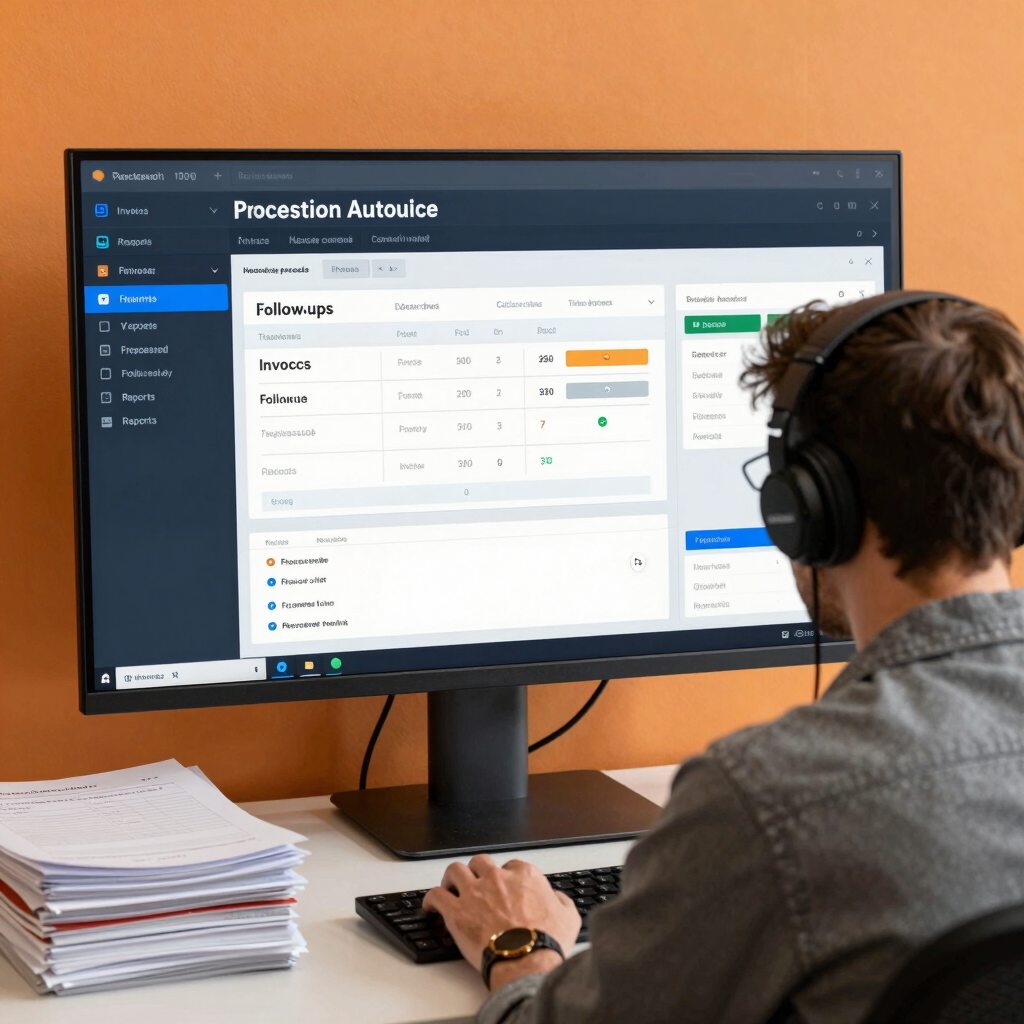
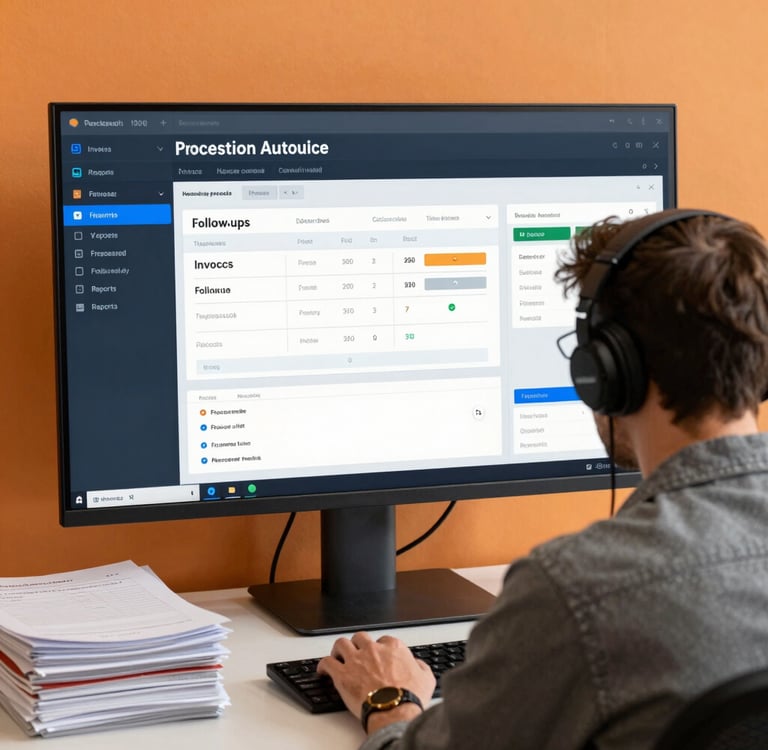
There is a category of work that exists in every small and midsize business — predictable, repetitive, rule-based tasks that follow the same sequence every time they occur, require human attention to initiate and complete, and would be done exactly the same way by any competent person following the established procedure. Data entry. Invoice generation. Follow-up email sequences. Report compilation. Appointment scheduling. Lead routing. Status update notifications. Document formatting.
This work is not strategic. It does not require judgment, creativity, or institutional expertise. It requires time — and it consumes a disproportionate share of the time that your team has available. Formstack's research estimated that employees spend more than half of their workday on manual, repetitive tasks. The Grammarly-Harris Poll data found that teams lose nearly a full workday each week to communication-related manual overhead alone.
Workflow automation is the operational discipline that systematically reclaims this time — converting rule-based, repetitive work into automated sequences that run consistently, accurately, and at a fraction of the cost of manual execution. The market for workflow automation reached $26 billion in 2026, growing at over 13% annually. SMB adoption has accelerated from 22% in 2024 to 38% in 2026 — a 73% increase driven by clearer ROI evidence and more accessible tooling. The businesses that moved early are building a compounding operational advantage over those still waiting.
10–15 hrs saved per employee per week by organizations using workflow automation — the equivalent of recovering one to two full working days of productive capacity per person
This+That / Mordor Intelligence Workflow Automation Research, 2026
Why Automation Delivers Disproportionate Returns for Small Businesses
Large enterprises face significant organizational complexity when implementing automation: legacy system integrations, change management across hundreds of users, procurement processes, security reviews, and the organizational inertia that slows technology adoption at scale. Small businesses face almost none of these obstacles. The team is small. Decision-making is fast. Implementation can move from identification to deployment in weeks rather than quarters. This structural agility is precisely why SMBs, when they act, often see faster ROI from automation than enterprise counterparts.
ProfileTree's analysis of business process automation implementations found first-year ROI ranging from 30% to 200%, depending on the processes automated and the quality of implementation. Salesforce's October 2024 survey found that operations departments see 47% ROI from automation, behind only IT departments at 52%. And Formstack's automation impact research found that businesses save an average of $46,000 annually through workflow automation — primarily through reduced labor costs, error prevention, and process acceleration.
$46K average annual savings from workflow automation per business — from labor cost reduction, error prevention, and process acceleration
Formstack Automation Impact Research
70% reduction in process errors from workflow automation — with corresponding 7% improvement in customer satisfaction
Gitnux / Capgemini Study via Salesforce
95% of IT professionals reported increased productivity after implementing process automation
Regina Corso Consulting
75% of companies consider workflow automation a significant competitive differentiator in their industry
GitNux / Custom Workflows AI Research
The error reduction finding carries an often-overlooked operational benefit. Automating workflows can reduce process errors by up to 70%, per Gitnux/Capgemini research. For small businesses where a billing error means a difficult client conversation, a missed follow-up means a lost deal, and a compliance oversight means a regulatory exposure, the error elimination value of automation is as significant as the time savings — often more so.
Where Automation Delivers the Fastest Returns for SMBs
Not every process is a good automation candidate. The highest-value targets share a common profile: high frequency, consistent process logic, significant manual time investment, and a high cost of errors. In our experience working with small and midsize businesses, five categories consistently deliver the fastest measurable returns.
1 Invoice generation and payment follow-up
Manual billing is one of the most consistently costly administrative burdens in small business — both in staff time and in the revenue delay caused by inconsistent follow-up on outstanding payments. Automated invoice generation triggered by project milestones or service delivery, combined with automated payment reminder sequences, compresses the billing cycle, reduces days outstanding, and eliminates the leadership time currently consumed by the awkward collections conversation that should never have required a leader's personal involvement.
2 Lead routing and sales follow-up sequences
Research consistently identifies delayed follow-up as one of the highest-cost conversion leaks in small business sales processes. Automating lead routing from inquiry to assigned salesperson — with triggered follow-up sequences that maintain contact at the right intervals — removes the human memory dependency that causes 54% of missed revenue opportunities due to delayed follow-up, per Verse research. The conversion gains from this single automation category frequently represent multiples of the implementation cost within the first quarter.
3 Reporting and data aggregation
The weekly or monthly report that requires someone to manually pull data from three systems, format it, and distribute it is one of the most universally present manual tasks in small business — and one of the most straightforwardly automatable. Automated reporting pulls the data, formats it to a defined standard, and delivers it to the right people on a defined schedule without human intervention. The staff time reclaimed from this single category, multiplied across twelve months, is frequently measurable in weeks of recovered capacity.
4 Customer onboarding sequences
The series of welcome communications, document requests, setup confirmations, and check-in touchpoints that constitute a new customer onboarding experience is often handled manually — inconsistently, and only as completely as the responsible team member's time allows on any given week. Automating the onboarding sequence ensures that every new customer receives the same complete, well-timed experience regardless of the team member involved. This consistency directly impacts the first-impression retention rates we documented in Post 10 of this series.
5 Internal approval and notification workflows
Purchase approvals, expense submissions, time-off requests, project status updates — the internal administrative flows that require someone to remember to initiate, someone else to review, and a third person to confirm. Automated workflow routing for these recurring internal processes eliminates the follow-up overhead that consumes staff time and delays decisions, while creating the audit trail that compliance and operational management require.
The Prerequisite: Process Before Automation
The most important insight in workflow automation — one that prevents the most common implementation failure — is that automation amplifies what already exists. A broken process, automated, becomes a faster broken process. The operational discipline of documenting and cleaning up a process before automating it is not optional overhead. It is the prerequisite that determines whether the automation produces the intended return or scales a problem the business already had.
66% of organizations have experimented with business process automation in at least one function. But only 31% have scaled to production. The businesses that cross that gap share one discipline: they map before they automate.
— McKinsey Business Process Automation Survey / DOIT Software Analysis, 2025
The sequence that consistently delivers results: map the current-state process in full; identify the manual steps that follow consistent, rule-based logic; document the ideal-state process with those steps automated; select the right tooling for the automation; implement in a contained pilot with clear success metrics; then scale. This sequence adds one to two weeks to the timeline. It converts a failed automation experiment into a successful one — and it is why the businesses that move from experimentation to production at scale are the ones that treated process documentation as the first step of their automation program, not an afterthought.
Contact
Let's improve your business together.
contact@rmscsolutions.com
© 2026 All rights reserved.
Contact
+1 647-576-7000